Not really gossip, just a cup of good insights worth steeping in. Here I recount three real experiences at the Boston Tea Party Experience, a Lexington bus tour, and a community nature festival, to become more aware of the small details, choices, and conditions that open the door to awe. Along the way, I invite you to try your own awe assessment: What might be helping people connect, and what could make it easier for awe to happen?
Awe is personal. What stops me in my tracks might not land the same way for someone else. In planning an experience for a museum or if it's a personal celebration like a party or a wedding, what we can do to invite more awe and connection is "tend" to the operational details that pull people out of a moment and make it easier for them to be present.
Most "awe blockers" come from small, unintentional gaps in the guest experience, not from a lack of care, expertise, or imagination. Maybe it is unclear where to begin. Maybe there is a long wait without context or understanding what's coming next, or a moment that is hard to see or understand. Address those gaps, and people are more likely to feel welcomed, included, and ready to notice what matters.
I have seen how thoughtful operations can invite awe. I have also seen how quickly that possibility can fade.
Awe Amplifiers: The Boston Tea Party Experience
In 2018, my son and I visited Boston.
He was 10 and learning about American history, and I knew enough to know that I probably should remember more about the Boston Tea Party than I did. I have never been especially good at holding on to dates and historical facts without a story to connect them to.
I had heard wonderful things about the Boston Tea Party Ships & Museum, which had been named recently as USA TODAY’s 2016 10Best Readers’ Choice Best Patriotic Attraction. From the beginning, the experience welcomed us in. We entered a meeting house as participants in a town meeting with the Sons and Daughters of Liberty, rather than as people standing outside the story looking in. We listened, responded, and began to feel the tension in that moment in history.
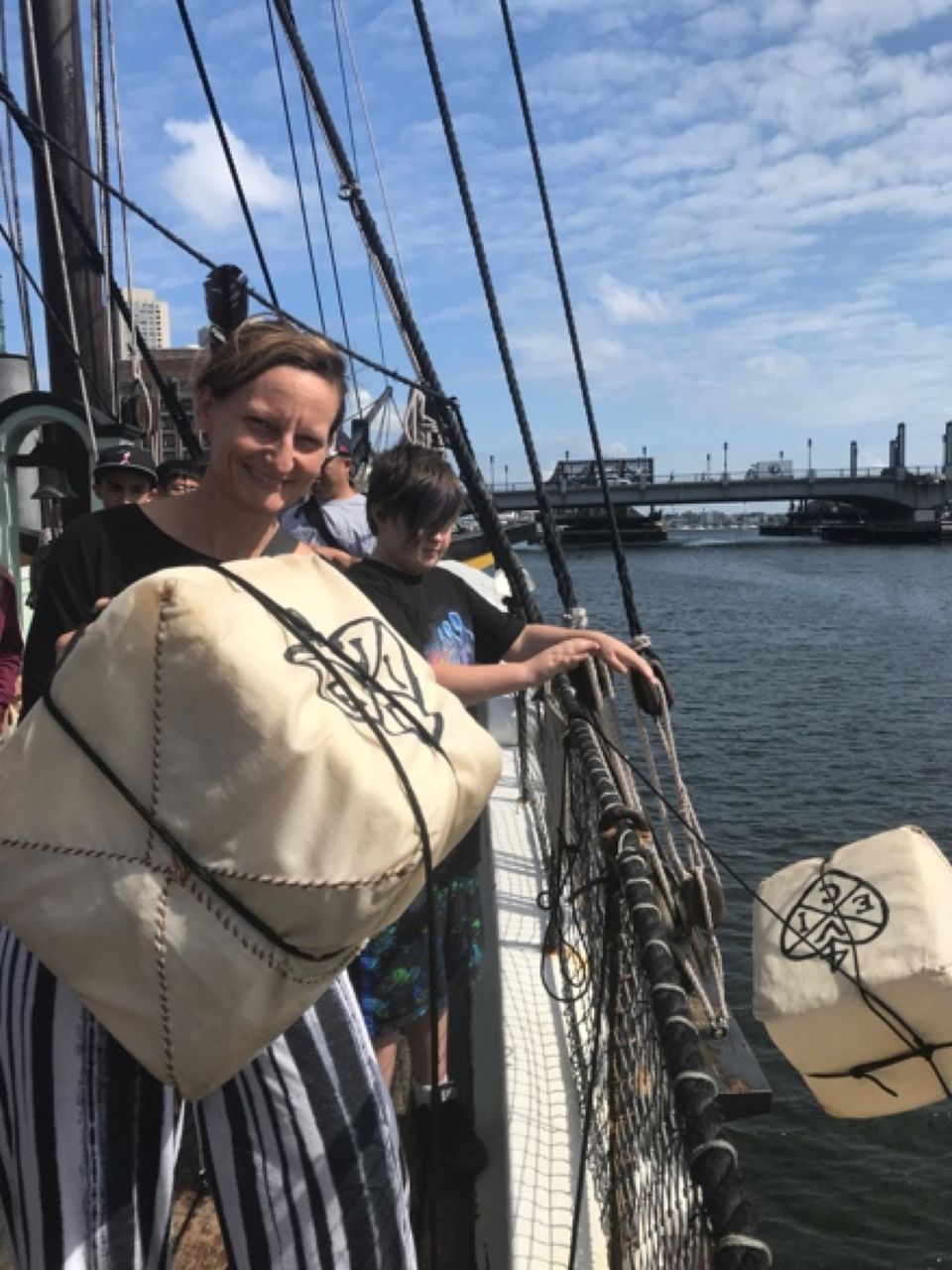
Then we walked down the plank to one of the ships and “threw” tea overboard into Boston Harbor. Inside, immersive films carried the story forward. We saw the Robinson Half Tea Chest, believed to be the only known surviving tea chest from the Boston Tea Party. It had been discovered the morning after the event by a 15-year-old boy and then passed down through his family for generations. Along the way, it had been a dollhouse, a place for dress-up clothes, and even a nest for kittens. That small, worn chest made history feel wonderfully human.
By the time we watched the final film about the next steps of the American Revolution, my mind had opened. I was thinking differently about the courage, uncertainty, and collective action of the people who pushed toward freedom, and what I could do to help create more freedom by using my gifts and talents to honor their sacrifice. At the time, I did not yet have a name for that feeling. Only later, when I began reading about awe, did I recognize it for what it was. The experience did not ask me to memorize history. It helped me feel connected to it and apply it to my life.
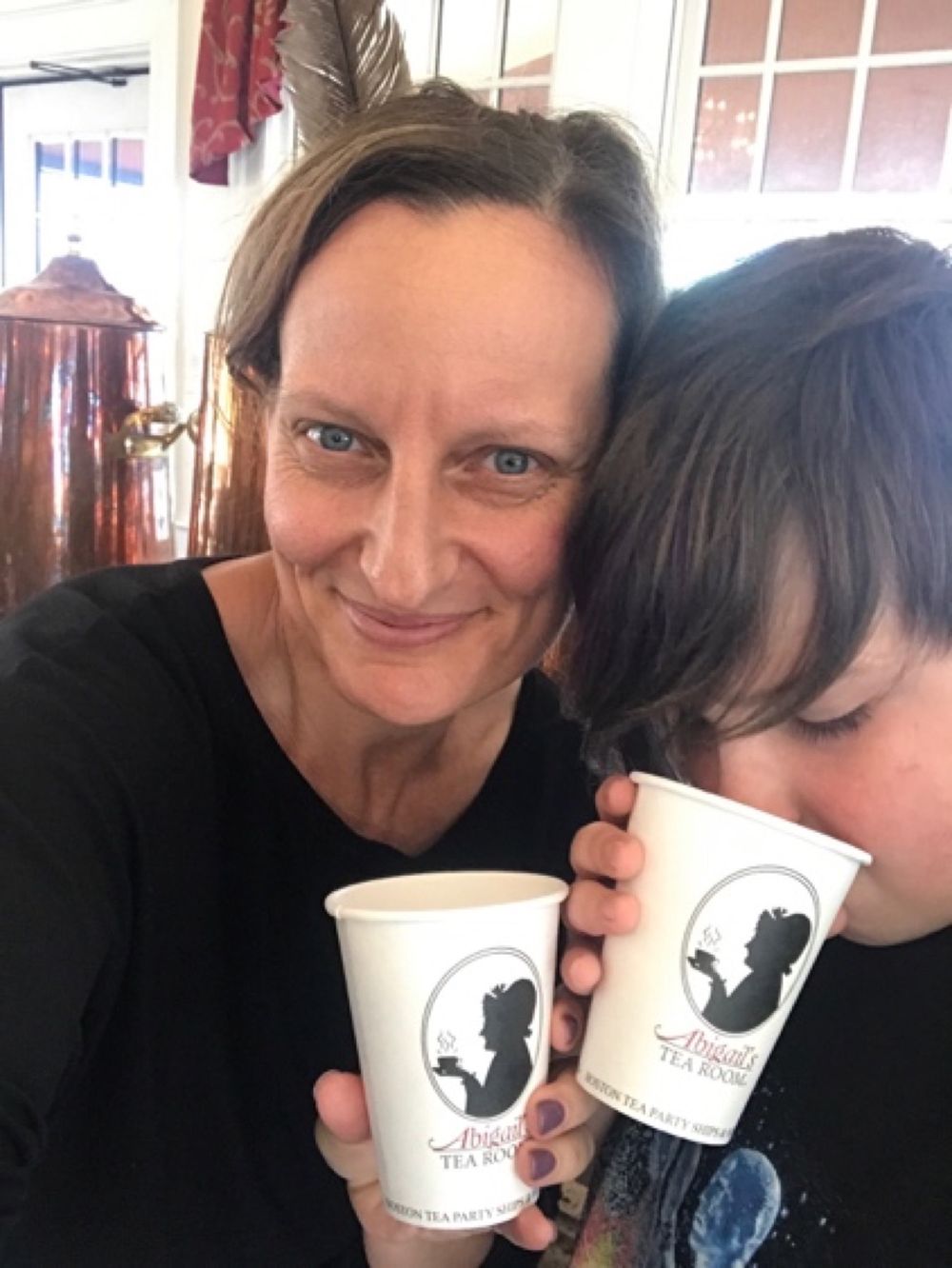
As we left that theater, we were welcomed into "Abigail's Tea Room" to taste the three different types of tea that were onboard. My son and I bought all three types as well as mugs. Every time I drink from that mug, I feel committed to do my part, and that looks like giving people freedom through creating optimal conditions to experience awe in the places I lead.
When the Path to Awe Was Missing: Lexington
A few months later, we returned to the Lexington Battle Green in Massachusetts eager to see the place where the first shots of the Revolutionary War were fired. We joined a trolley tour, excited to connect the place we had seen on screen with the actual landscape.
But the experience never quite got us there. We sat beside the historic field on a trolley while the guide spoke at length about facts and numbers without inviting the group into the story or getting out to go stand in the actual field. After more than 30 minutes, my son asked if he could use his phone, but his battery was dead.
We got off the bus before it continued to Concord. I shared our feedback respectfully at the ticket desk and asked for a refund, not because I thought anyone did not care, but because so much possibility to connect to that place was sitting right beside us. We arrived ready to be curious, and the historic field was steps away. Yet the experience itself became a barrier between the group and the moment.
The potential was there, but the path was not. A team can care deeply, and a guide can have tremendous knowledge, but when they don't read the room or just speak as a "sage on the stage," awe can remain just out of reach. Strong interpretation skills and operations are vital to provide the invitation, access, and support that help people reach the intended connection with the place.
It appears the team have changed the approach to the tour since we were there, offering “an entertaining and knowledgeable guide in period dress” to bring the sites to life. Now that I know this, I’d definitely return next time I’m there!
Missed Awe: A Community Nature Festival
I saw another version of this at a recent community nature festival.
The volunteers were friendly and efficient in getting us tickets and parked, and the event brought together people with real expertise and attracted hundreds of families ready to learn. Once we entered, though, my husband and I were not sure where to begin. There was no map, little signage, and no clear orientation to help us understand what was happening or where we might connect with the featured hummingbirds.
One station focused on bird banding, where volunteers were studying birds caught in nets elsewhere on the preserve. No hummingbirds were captured while we were there, which is simply part of working with wildlife. Still, about fifty people waited hopefully, while the bird-banding volunteers sat in silence or sold donation opportunities to sponsor a banded bird. No one explained what was happening, why people were waiting, why it mattered, or what they might see next.
When a different bird finally arrived to be banded, an excited family moved to the front and unintentionally but completely blocked others’ view. The volunteers stayed focused on their important work, but no one was there to help the larger group see or understand the moment.
The biggest draw was another visiting nonprofit with live animals for children to meet, including snakes and turtles, but that was not the focus of the event. A preteen in a hummingbird costume was another bright spot, joyfully engaging kids. Both moments showed that the audience was ready to participate. The festival already had committed volunteers, knowledgeable partners, and families eager to learn. A few simple cues could have created more connection: active greeters with maps, a host or narrator, music to fill the silence, a clear viewing area, and a voice saying, “Here is why this matters. Here is what you are seeing. Here is how you can help our cause.” We left feeling disappointed we didn't learn anything about hummingbirds and sad for the missed opportunities for people to connect to the organization.
Awe Blockers and Awe Amplifiers: A Quick Comparison
Experience
Type of awe experienced/missed
Awe amplifiers
Awe blockers
What would help
Boston Tea Party Ships & Museum
Moral beauty: the courage and collective action of the founding leaders; collective effervescence: the shared energy of participating together
A clear welcome into the story; active participation in the meeting and tea throwing; immersive settings and films; a memorable artifact with a human story; a beginning, middle, and end.
Very few in our experience. The experience gave us a clear way in rather than asking us to figure it out for ourselves.
Keep pairing historical expertise with participation, storytelling, and tangible details that help guests feel connected to the people behind the history.
Lexington bus tour
Moral beauty (potential): the courage, uncertainty, and collective action surrounding the first shots of the Revolution
A historic site with real emotional and educational potential; visitors who arrived curious and ready to connect.
A long, one-sided introduction; little orientation; no invitation to notice the historic landscape; too much time before the experience felt underway.
Start with the place and the story, invite questions early, and give guests a reason to look, imagine, and participate from the beginning.
Community nature festival
Big Nature and the Life Cycle: the amazement of hummingbirds, bird banding, and close encounters with living animals
Friendly volunteers; dedicated experts; families eager to learn; bird banding; live-animal encounters; a costumed young volunteer who engaged children.
No clear starting point, map, or signage; little context during the wait; limited sightlines at the banding station; no one helping the larger group understand what was happening.
Add a simple orientation, map, and signage; designate a host or narrator; set up a clear viewing area; music to help fill the silence; explain what guests are seeing and how they can support the work.
Try an Awe Assessment
These obstacles can show up anywhere: in museums and nonprofits, at conferences and family gatherings, on field trips and nature walks. They can also show up inside us. We may be too rushed to linger, too distracted to notice, too worried about getting the perfect photo to actually look, or too convinced that we already know what is in front of us.
An awe assessment is simply a practice of asking: If someone arrived ready to be moved to awe, what might get in their way? Where could we make it easier to pause, notice, understand, participate, or share the moment with someone else?
Try A Quick Awe Assessment:
Walk the experience like a first-time guest. Before you explain anything, ask: Do I know where to start? Do I know what this is? Do I feel welcomed?
Notice the waiting. Lines, pauses, and transitions can become dead space, or opportunities for story, music, conversation, and anticipation.
Ask what people can see and hear. Can everyone view the key moment? Is there enough context to understand why it matters? Is a voice, sign, or visual cue needed?
Make participation clear. People often want to engage but need permission. Offer a question, an invitation, a simple action, or a person who can help them join in.
Look for accidental gatekeepers. Jargon, long monologues, unclear logistics, blocked sightlines, and assumptions about what people already know can all keep wonder at a distance.
Invite feedback with generosity. Ask guests what they noticed, where they felt lost, and what stayed with them. Feedback is not an indictment; it is a way to see what you cannot see from inside the operation.
Conduct a personal assessment, too. When was the last time you slowed down enough to be surprised? What distractions, habits, or expectations might be keeping awe from reaching you?
Awe does not require perfection. It requires attention. When we remove even one small obstacle, we make more room for someone to have that shared “whoa” moment, and maybe to carry it with them long after they leave.