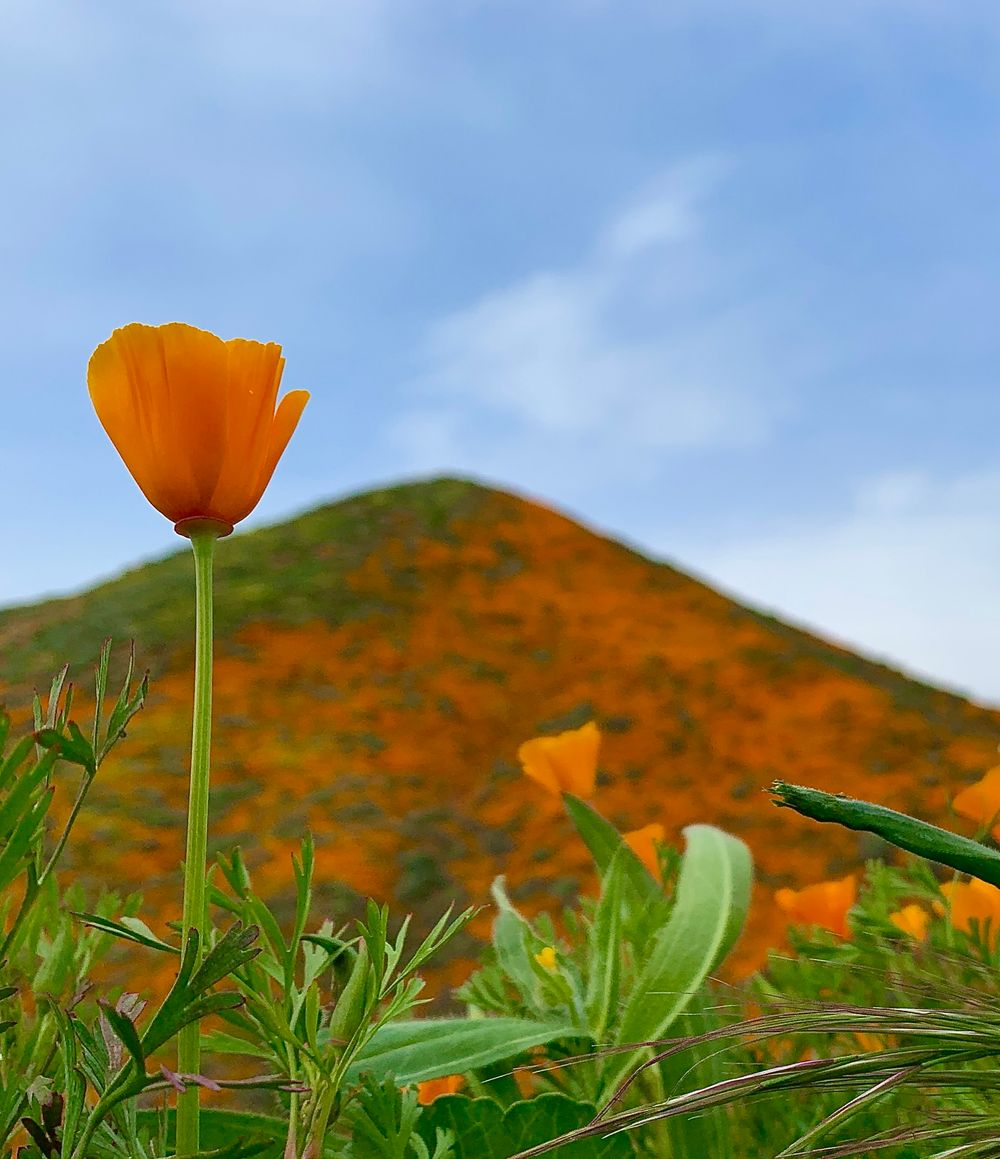
In the spring of 2019, Southern California had poppy mania.
After a long, multi-year drought, an unusually rainy season brought my home state of California’s state flower back in crazy high numbers. National news stories showed hillsides glowing orange, so my friends and I headed to Lake Elsinore on a weekday, hoping to avoid the crowds.
About 90 minutes south of Los Angeles, the landscape had suddenly become famous. When we arrived, hills upon hills were covered with poppies.
My science-teacher stepdad was in my head, asking, “Why this year?” Searching for the answer made the spectacle no less magical. Winter rain awakened dormant wildflower seeds, while the preceding drought had reduced some invasive grasses that compete with native flowers for space and water. Together, those conditions created the rare abundance known as a super bloom, so widespread it could be seen from space.
Gray clouds made the poppies look almost fluorescent. I could not take enough pictures, but what amazed me most was the people. Strangers smiling, pointing, talking, and sharing the same disbelief. I found as much joy in watching everyone else light up as I did in looking at the flowers.
Later that week, my friend Karsha Chang posted an article about the emotion of awe: Why scientists say experiencing awe can help you live your best life. With that one article, things all of a sudden made sense to me looking over my shoulder. I began learning more about the science of awe and recognizing myself as an awe seeker, but also as an Awe Conductor. I felt so full of gratitude to not only experience awe regularly, but through my work in museums, bring the conditions, the experiences and guests together to invite them into awe moments.
Suddenly, I had language for something I had experienced many times before: that feeling of encountering something so vast, beautiful, or unexpected that it expands your perspective and makes you feel part of something bigger than yourself.
That day among the poppies became one of the pivotal moments that helped shape my career and frame of mind. For decades, I had helped create experiences in museums and public spaces that invited people to pause, wonder, learn, and connect. The super bloom helped me see that awe was not just a lovely extra. It was a clue to what mattered most to me: creating more curiosity, more connection, and more of those shared “whoa” moments.
Today, I call myself an Awe Conductor. I help people notice, make room for, and connect to awe in everyday life. Not only in spectacular fields of flowers (we have those in Texas where I live now too), but also through art, music, nature, science, and moments of shared human connection. I believe more awe can help create a more curious, more connected world.
And every spring, when I see a California poppy when I'm visiting home, I remember those fluorescent-orange hills and the joyful sea of people standing in awe together.